I am always getting questions from new or prospective weavers wondering how to actually get started with weaving. The world of weaving is vast and if you do not already have a clear idea of where you want to go it can be overwhelming trying to figure out where to start.
Warped Fibers has over 130 posts to teach you all about different types of weaving, tutorials for techniques, material and tool spotlights, weaving philosophy and so much more.
That being said, you don’t know what you don’t know, so how do you know where to go first?
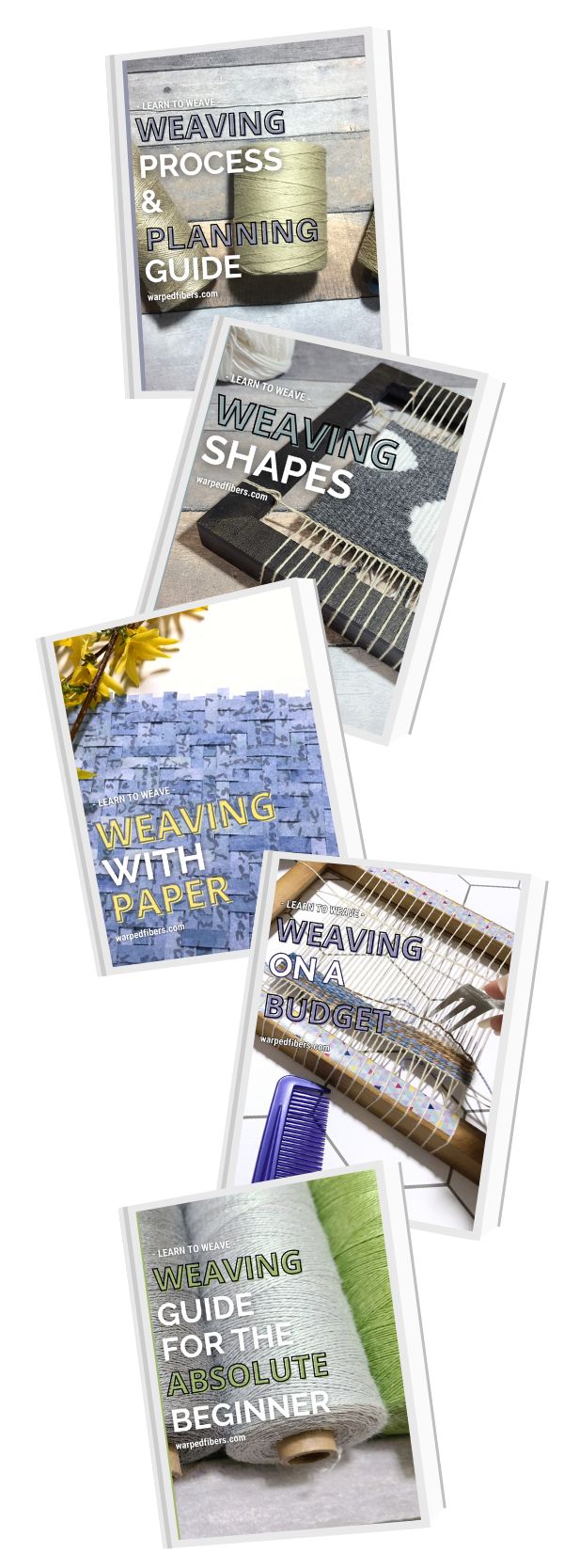
Weaving Guide For The Absolute Beginner
First, you will want to start your weaving journey by grabbing my FREE guide.
This guide will walk you through the very basics of figuring out where to start – including the most common weaving terms, types of weavings, types of looms, and more. This guide also includes many links that will help you as you move forward.
These links all go to various beginner friendly posts here on Warped Fibers that are great to read through to help you with the basics.
Once you have the basics down, you can dive a little deeper and start making some plans for your weaving journey!
Go exploring to figure out what you want to weave

Instagram and pinterest are both perfect for finding inspiration to try and figure out what types of weaving you want to learn. Weaving comes in many different shapes and forms. By doing a bit of research and answering a few questions you can get a better idea of what you want to pursue.
When it comes to weaving you can consider it as having tiers for each type.
The first step is deciding the type of weaving you want to create – deciding if you want to get more specific or stay general.
There is no right or wrong answer!
It is all just a matter of how you like to learn and ultimately what you want out of the experience.
See if you can answer these questions to get started:
Do you want to weave tapestry?
Are you interested in:
- Imagery?
- Abstract designs?
Do you want to weave functional work?
Are you interested in:
- Scarves?
- Towels?
- Rugs?
- Yardage for pillows, clothes, etc.?
Are you interested in:
All of these questions can lead you to a good place to start with figuring out what is right for you.
If you said yes to all of the above, then I recommend narrowing it down to what is the most interesting or accessible for you to start out with. There will be time for you to try out everything eventually!
By the end of Weft-Faced, you’ll have the techniques, the confidence, and the creative freedom to make tapestry that is completely, beautifully yours.
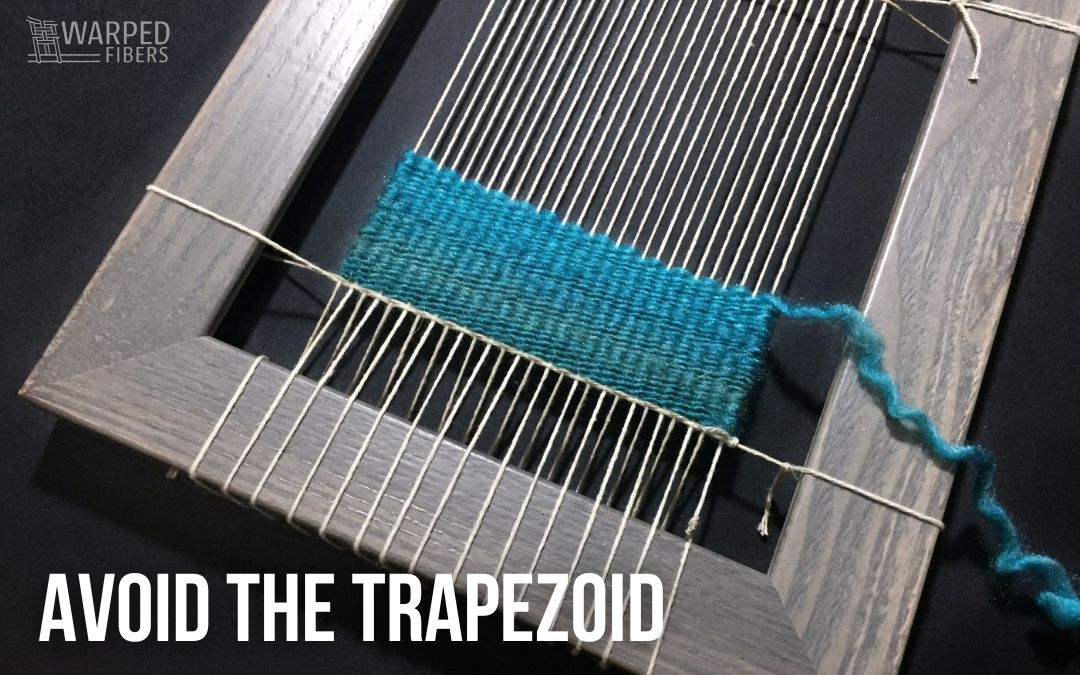
No more staring at a blank loom wondering where to start. No more trapezoid-shaped tapestries. No more feeling like tapestry is for someone else.

Consider materials, budget, and space
Unfortunately, your decisions don’t stop there.
Once you choose the type of weaving you want to create, whether it be specific or general, you will then need to consider your materials, budget, and space to know where to go next.
Different types of weavings and different size weavings may require different types of looms.
- Do you like to work big?
- Do you like to work small?
- How much space do you have to weave and store everything?
When it comes to space, luckily, looms come in all sizes.
Some of them even fold up when you are not using them (with an in-progress weaving still on it!)
I have reviewed 2 rigid heddle looms that fold for easier storage:
Schacht Flip rigid heddle loom review
Kromski Harp rigid heddle loom review
There are also table looms and floor looms that are made for travel. This includes the Ashford table loom (review coming soon!)
These portable looms, though, may not be necessary if you don’t plan on traveling with your loom. If you want to weave big and have a dedicated space for a loom then you will probably be better off putting your budget towards weaving width or versatility than portability.
Space requirements are not only for your loom storage, but also relate to literally where you will sit down to create. While it is great to have a dedicated studio to weave in, you can also weave outside of a studio.
If you want to work small and you are working on a budget then you can use picture frames that you have thrifted or taken from around your house or explore embroidery weaving.
There are so many different loom options. Focus on what you want to make, the space you have, and your budget and it should lead you to the right loom and equipment for you.

One of the biggest deterrents to starting to weave is the cost of materials, equipment, and tools.
- What is your material budget?
- What is your equipment budget?
I’m not going to lie, weaving can be expensive.
I talk about this throughout Warped Fibers.
That being said, it doesn’t always have to be costly because there are ways to weave on a budget without sacrificing anything! That might mean starting with a smaller loom and learning how to sew your weavings together or buying looms second-hand at a discount.
I have personally purchased most of my looms second-hand and I have zero regrets. It is a fantastic way to get a deal on larger looms and tools – plus it can be a more sustainable option!
Learn more about weaving on a budget here.
Take a weaving class

One of the best ways for anyone to start weaving is to take a class.
Taking a weaving class allows you to not only learn from a weaver and ask questions, but if the class is in-person, then it also allows you to use the tools and materials without purchasing them for yourself.
That is definitely a win-win!
This is especially great for classes that involve large equipment like floor looms that you may want to try out before you invest the money and space in your home. I have had many students use this method and many who continue to take the class to keep access to the floor looms without purchasing and housing one themselves.
Classes can also help you to get started faster because if the class is for a specific project, then the planning is usually already done for you. This way you can get into the weaving faster!
Hopefully, the class will also teach you the planning, but admittedly it sometimes helps to get to the fun stuff before the tedious things when starting something new.
You can also learn about planning your weaving project from my Weaving Planning & Process Guide.

Taking a weaving class is also great because it allows you to dedicate a specific time to learn something. Sometimes it can be hard to sit down and learn on your own time. That being said, you might want something you can do on your own time.
In this case, online classes are great options! If there are no classes near you or you can’t make them work with your schedule. These classes can usually be done on your own time so you don’t have to worry about learning to weave around someone else’s schedule, instead you get to learn on your own.
I know that classes are not always in everyone’s budget. That is where the next point comes in…

Join a weaving community
Similar to taking a class, joining a community is a great way to be amongst like minded makers who are also learning and weaving. There are a lot of different types of communities that you can join, both in-person and online, but all of them should be a great way to share and learn from others.
These communities might not always be a place for tutorials or lessons, but they should be a place for conversation, sharing, and inspiration. I recommend looking for places where you can ask questions and gush over other weavers creations. In my experience, weavers usually love to share and talk about the weavings they have created.
Some types of communities you could join:
Local and national weaving guilds
Look online for guilds that you can join. These groups usually have fees associated with them but usually provide plenty of extra perks in return.
You can join a weaving group on reddit.
There are a lot of different types of weaving and fiber art groups on reddit that you can join for free and start sharing with the greater weaving community.
Another option, and I may be bias, but I recommend joining the Warped Fibers discord! This discord group is for students and community members are has weavers from all over the world! You can join the community completely for free by signing up for the newsletter here.
Just start!

If after everything else, you are still not sure where to start, then I recommend just starting anywhere. I know that can be easy to say and not always easy to do, but tough love time.
Just start!
Let me let you in a little secret:
Your first weaving does not have to be perfect. Either does your second or your 100th.
It can be really easy to get caught up in the idea that you have to learn every little thing before you get started. And while I recommend learning about the techniques and mediums you want to use, if you wait to start anything until you know everything then you will never start.
So grab some cardboard, wrap some yarn around it, and try bringing weft to warp.
Learn how to make your own cardboard loom here.
Starting with a simple plain weave, you can get a feel for the act of weaving itself by playing with your materials. Think about color, texture, and more. Then think about what you wish you could be weaving and that is probably a good place to go next!
Samples can also be a great way to try things out before you devote your time and materials to a full project. If you go into a weaving knowing that it is a trial then it can help allow you to take chances and make mistakes. This is what will really help you to learn.
Learn more about why samples are important here.
If you are just trying things out then weaving with paper can also be a really good starting point. It is a surprisingly versatile weaving material that can go far beyond children’s crafts. It is also inexpensive which means it can be an accessible option for just about anyone.

The question of where to start your weaving adventure doesn’t have only one answer. Figuring out why weaving is calling to you can be one of the most helpful ways to find a starting place, and so does just starting literally anywhere.
One of the things that I love about creating this site is that I can bring weaving information to anyone who is willing to come find it. You can join my mailing list at any time and get an email whenever there is a new post. That way you can learn things you didn’t even know you didn’t know.